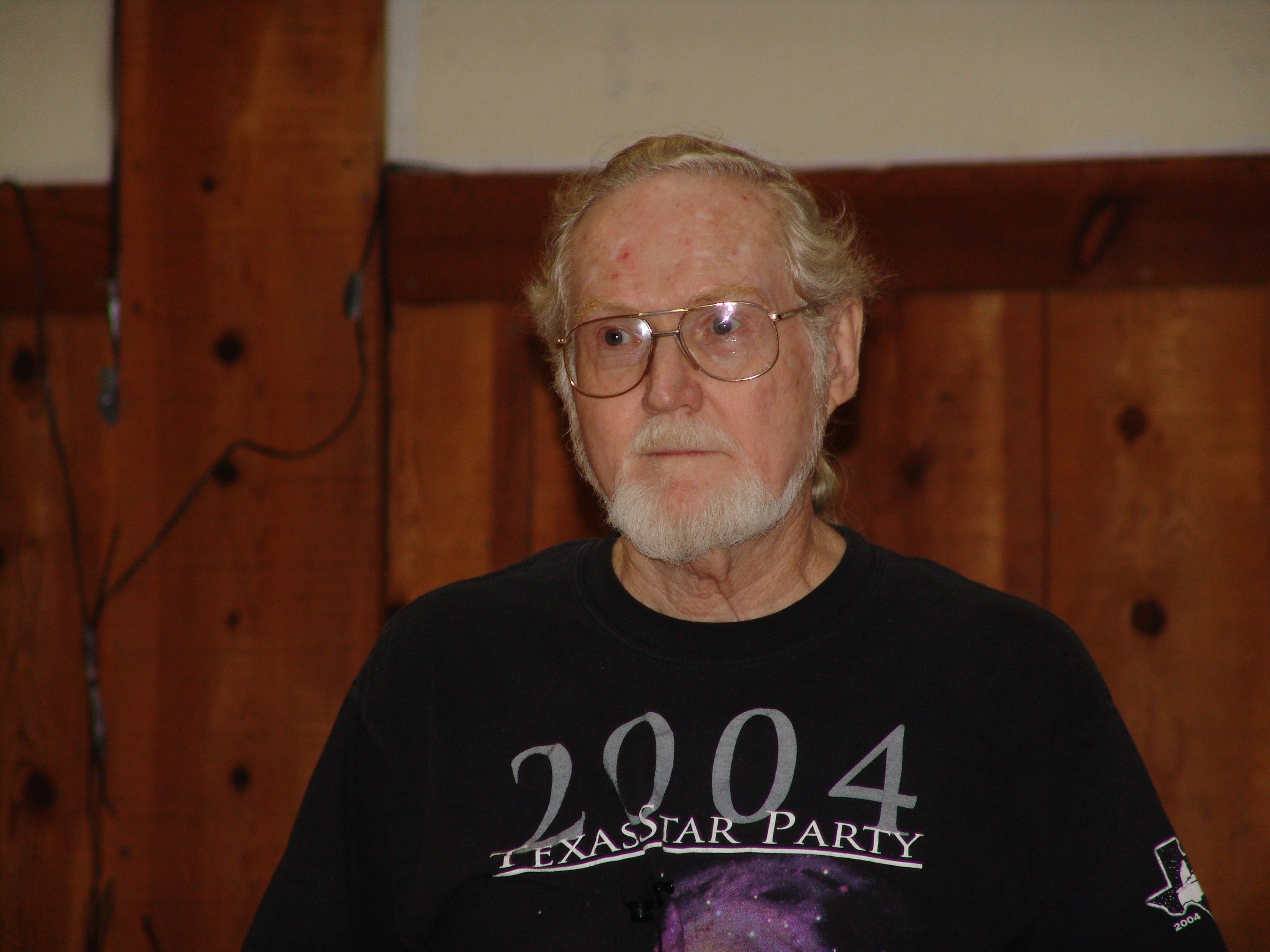
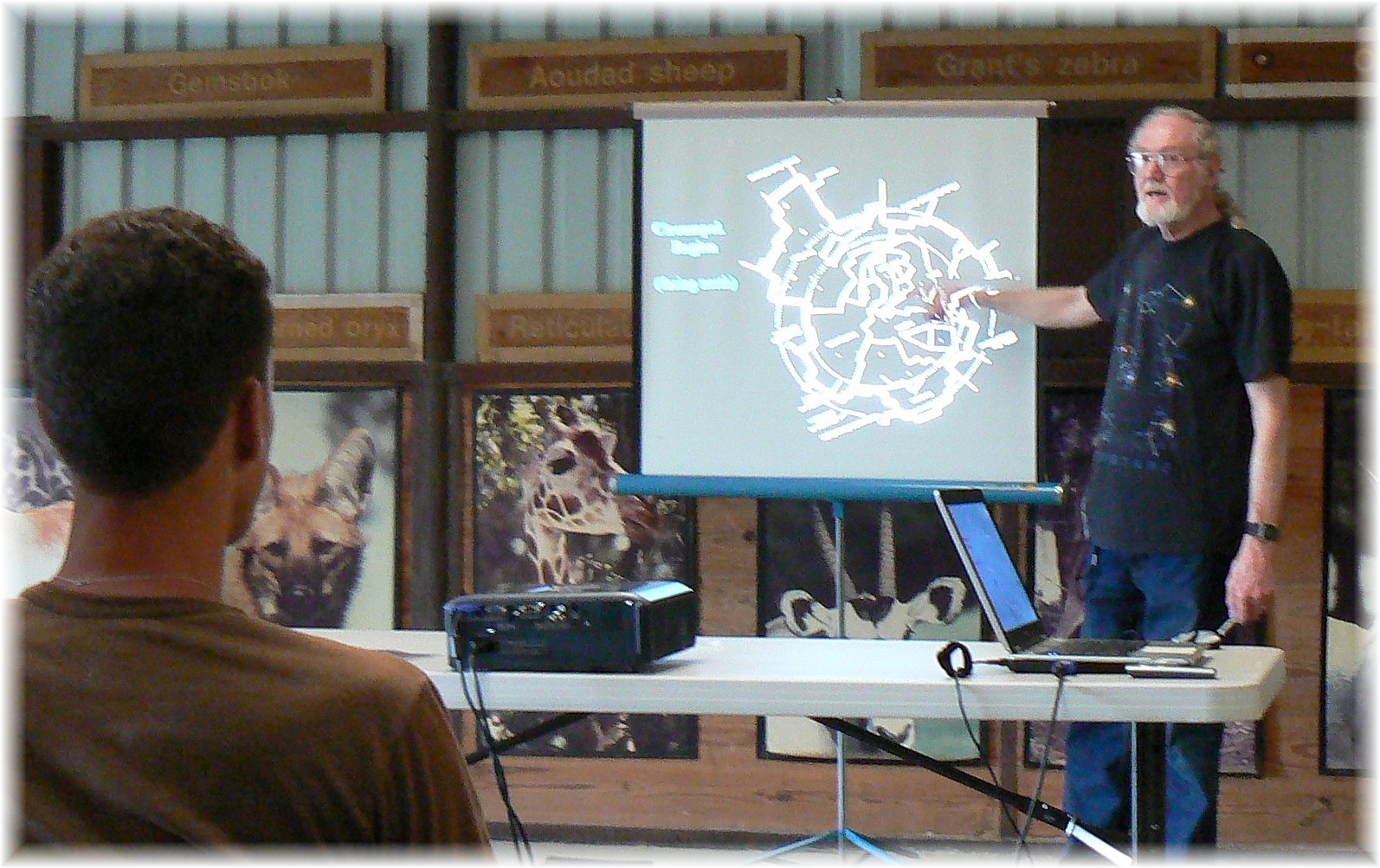
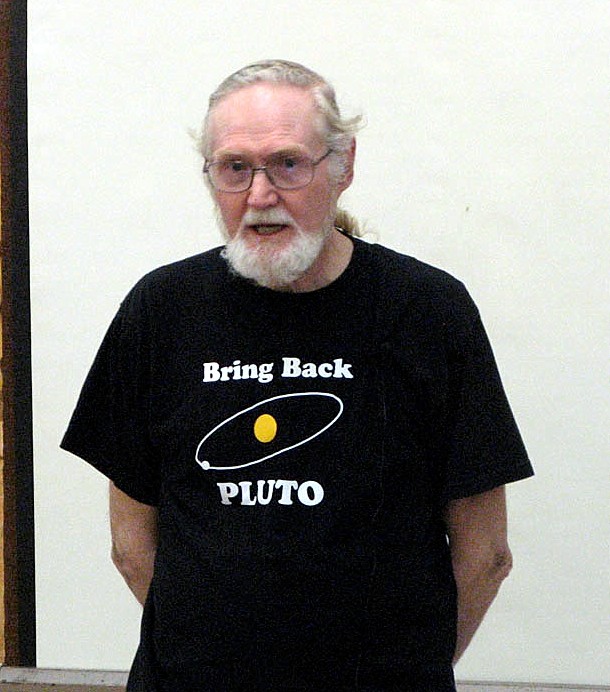
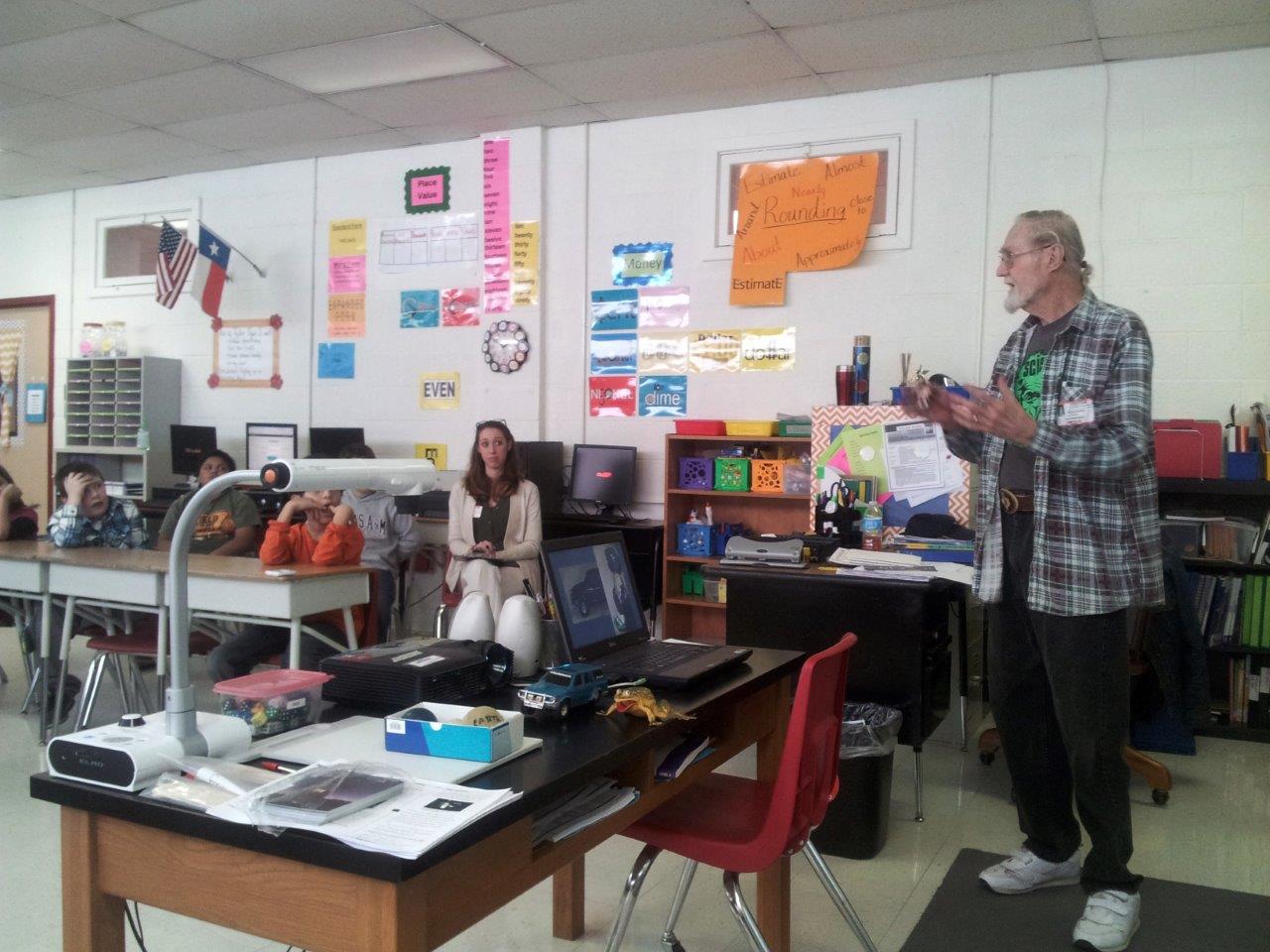
Paul conducts public and private amateur astronomy programs and star parties for children and adults in schools, camps, parks and other settings. Below are some of his slide (Power Point) programs which are geared to general audiences of all ages with limited astronomical background. (Some will also be of interest to the more sophisticated amateur astronomers.)
|
|
"A Brief History of the Copernican Revolution"
This program presents the major players and their roles in the "paradigm shift" from the Ptolemaic Earth-centered view of the cosmos to Copernican's Sun-centered view. "Constellations with a Little Imagination"
This program introduces star patterns we call constellations, how and why they came to be, and some of the better known patterns. "Constellations of the Season"
This program focuses on the constellations prominent in the current season. "Cosmic Concert"
In 2001 concert pianist Dr. Michael Ard and amateur astronomer Dr. Paul Derrick combined their talents to present a concert in which Dr. Ard's piano performance of William Duckworth's "The Time Curve Preludes" was given a cosmic perspective by Dr. Derrick's accompanying astronomy slide presentation. In Dr. Ard's absence (he has now retired to Tucson), Dr. Derrick's revisited presentation, set to Don Robertson's synthesized recorded "Starmusic: Horizons Beyond Infinity," produces a visual-auditory-cerebral experience that takes one from the beginning to the end of time-space, and from the remote reaches of deep space to everyday life -- all in 15 minutes. "Extraterrestrials"
Based on the marvelous book Extraterrestrials: A Field Guide for Earthlings written by Terence Dickinson and illustrated by Adolf Schaller, this program presents speculations on what extraterrestrial life - if it exists - might be like. "Journey to Outer Space"
Using the metaphor of an imaginary journey starting at planet Earth and traveling into deep outer space, this program presents a good introductory survey of "what's out there" - from solar system objects to stars, nebulae, clusters, galaxies, and yes, even black holes. "Learning the Night Sky by Regions"
This program is an introduction to Paul's original system of learning the major stars and constellations by partitioning the night sky into nine regions and the story or theme which relates each of the region's constellations to one another. "Life Cycle of a Star"
This program examines the life cycle of stars beginning with their formation in star-birthing nebulae through their main sequence and on to their end stages and death, including planetary nebulae, white dwarfs, supernovae, pulsars, and black holes. "Maya Astronomy"
This program presents an elementary introduction to the role of astronomy in the creation myths of the Mayas who lived hundreds of years ago in what is now southern Mexico and Guatemala. "Meteors, Comets and Impacts"
This program introduces meteors, comets and the relationships between them, and the effects produced by their impacts with other objects, including Earth. "Our Expanding Universe"
The Big Bang, the Copernican Revolution, other intelligent life in the universe, and the impact these things have on us and our species are among the topics are presented and opened for discussion. "Seeing the Southern Sky"
Based on the Stargazer's 2001 and 2012 trips to New Zealand (and Tahiti), this program presents highlights of the night sky as seen from the southern hemisphere and the differences those of us from the northern hemisphere are accustomed to seeing - not just seeing new stars and constellations but also seeing familiar patterns from a different perspective - like an "up-side-down" Orion. "Solar System Model"
Using familiar every-day objects (e.g., Earth as a tennis ball) and the Waco area, this program helps one visualize the relative sizes of solar system objects and the distances between them. "Time: Cycles of Nature and Humans"
This program identifies the major measures of the passage of time we use in our everyday life, differentiates those which are human inventions, and examines more closely those based on cycles of nature.

|
 |
 |
-edited.jpg)
|
 |
 |
 edited.jpg)
|
|
Contact Paul at:
(254) 753-6920 (voice and fax)
paulderrickwaco@aol.com
Return to HOME PAGE


